
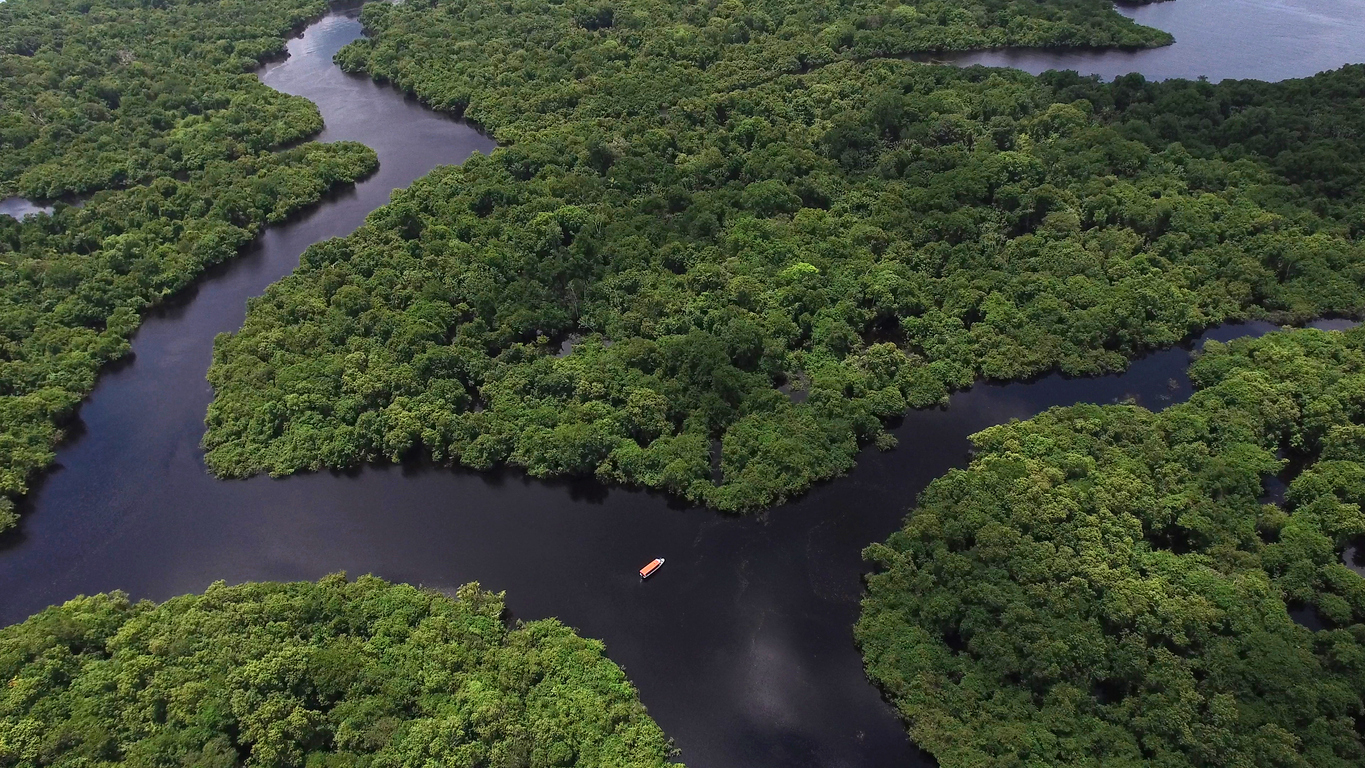
There are few places left on Earth that still feel truly primeval.
The Amazon is one of them. And right now, there is a particularly good reason to start planning a journey there.
Aqua Expeditions — one of the operators I recommend for the Peruvian Amazon — is currently offering 20 percent off the Aqua Nera across all 2026, 2027, and 2028 departures. For anyone who has had this journey on their list, that is a meaningful window. I want to use it as an occasion to write about what a luxury Amazon expedition actually looks like — the wildlife, the two seasons, the operators worth knowing, and why this is unlike any other journey I design.
To cruise the Amazon River is to enter a living, breathing ecosystem that operates entirely on its own terms. The largest tropical rainforest on the planet spans nine countries, shelters more species of bird, mammal, and freshwater fish than almost anywhere else on Earth, and produces roughly 20 percent of the world’s oxygen. It is ancient, vast, and profoundly indifferent to the world beyond its canopy.
Which is exactly why it is so extraordinary.
What Makes an Amazon River Cruise Different
This is not a traditional cruise. There are no beach clubs or port-day shopping streets. What there is — aboard the small expedition ships that navigate these waters — is something harder to find and more difficult to forget.
Luxury Amazon operators like Aqua Expeditions and HX Expeditions have built vessels specifically designed for this environment: intimate ships carrying fifty to a hundred guests at most, equipped with a fleet of skiffs for daily exploration, staffed by naturalists who have spent careers in this ecosystem, and appointed with the kind of refined comfort that makes returning to the ship each evening feel like a reward rather than a retreat.
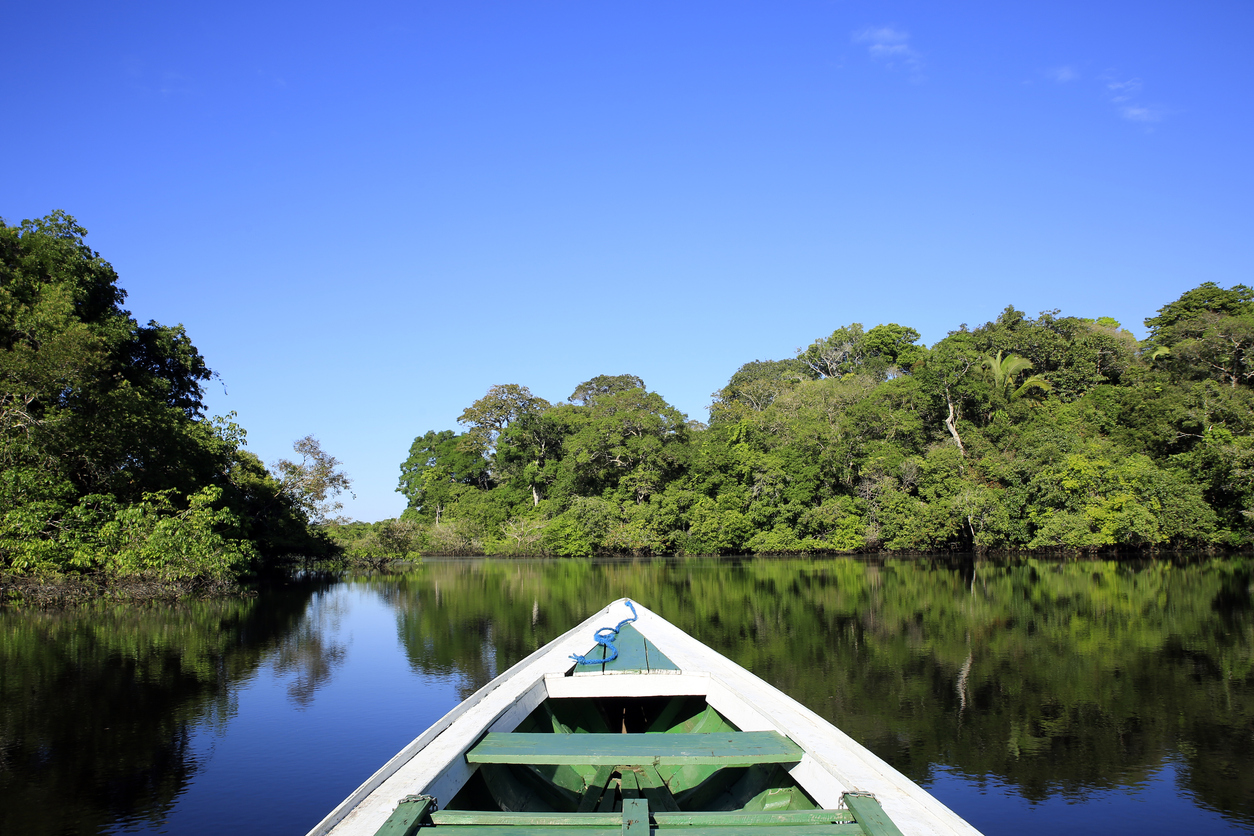
The days are structured entirely around the river. Dawn skiff rides through mirror-still tributaries where the water reflects the canopy above. Guided rainforest walks where a trained eye finds what you would walk past entirely. Night excursions along the riverbank, headlamps catching the eyes of caimans in the dark.
Five-star comfort and raw wilderness are not, it turns out, mutually exclusive.
The Wildlife
Nothing fully prepares you for the Amazon’s biodiversity — not the statistics, not the photographs, not the accounts of people who have been before you.
Pink river dolphins surface alongside your skiff without warning, their strange pale forms moving through opaque brown water. Scarlet macaws cross the sky in pairs, flashing red against impossible green. Three-toed sloths hang motionless in the canopy, visible only because your naturalist has spent years learning where to look. Giant river otters, jaguars, capybaras, caimans, anacondas — the Amazon Basin holds more life per square kilometer than virtually any other ecosystem on the planet, and it reveals itself gradually, on its own schedule.
You are a guest here, not a director. That humility is part of what makes it so affecting.
High Water and Low Water: When to Go
The Amazon operates on two distinct seasons, each offering something genuinely different.
High Water — December through May
The river rises dramatically, flooding the surrounding forest and opening entirely new waterways. Skiffs navigate deep into flooded woodland where the trees grow directly from the water and howler monkeys watch from the branches above. The reflections are extraordinary. The sense of being inside the forest — rather than alongside it — is unlike anything else.
Low Water — June through November
The riverbanks emerge, and wildlife concentrates along the water’s edge. Longer jungle walks become possible. Animal sightings tend to be more frequent and more varied. The landscape feels more exposed, more theatrical.
There is no wrong season. There are only different Amazons.
Cultural Encounters That Stay With You
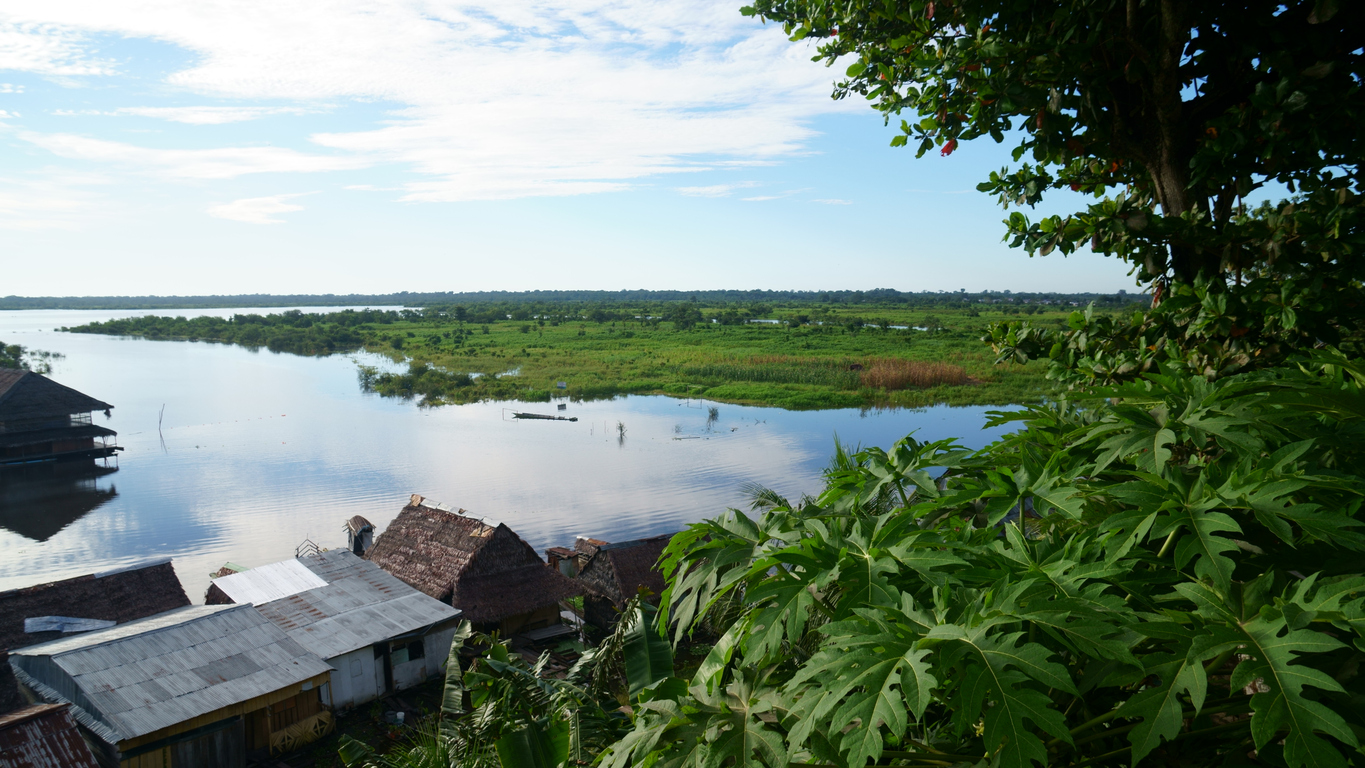
Cruising the Amazon also means moving through a world where human life has always revolved around the river. Riverside communities whose economies, traditions, and daily rhythms are entirely shaped by the water welcome expedition visitors in ways that the best operators approach with genuine care and respect.
These visits — when handled thoughtfully — are not performances or photo opportunities. They are exchanges. You learn something about how people live when the forest is both provider and neighbor. And more often than not, they become the part of the journey that travelers talk about longest after they return home.
Why Your Choice of Operator Matters
The Amazon rainforest is under significant pressure. Deforestation, climate change, and poorly managed tourism all affect an ecosystem that the entire planet depends on. The operator you choose directly shapes your impact on the region.
The right expedition company employs local guides who carry generations of knowledge about this environment. It limits passenger numbers to protect sensitive areas. It supports conservation research and contributes meaningfully to the communities it visits. It moves through the Amazon in a way that leaves it better than it found it.
Aqua Expeditions is one of those operators. Their two Amazon vessels — the 20-suite Aqua Nera and the 16-suite Aria Amazon — are purpose-built for this environment and consistently rated among the top expedition cruise experiences. Worth noting right now: Aqua Expeditions is offering 20 percent off the Aqua Nera across all 2026, 2027, and 2028 departures. For anyone in the planning window, that is a meaningful opportunity. The brand has also just launched a new superyacht sailing East Africa and the Arctic in 2026 — a signal of where the best operators in this space are headed.
This is the same principle that guides how I approach safari travel. How you travel is inseparable from what your travel means.
Pairing the Amazon with a Broader South American Journey
The Amazon pairs beautifully with a broader South American itinerary. Peru’s Machu Picchu and the Sacred Valley. The Galápagos Islands and their extraordinary endemic wildlife. A few days in Buenos Aires or Santiago for culture, cuisine, and contrast before heading into the wild.
These combinations require thoughtful routing and sequencing — the kind of planning that looks invisible when it’s done well.
This Is Not a Checklist Destination
Cruising the Amazon is not about ticking a box. It is about slowing down enough to hear the forest breathe. About realizing how small we are in the presence of something genuinely ancient. About returning home with a renewed sense of what the natural world is capable of — and what it asks of us in return.
If the rainforest has been quietly calling your name, I would love to help you answer it. The right season, the right vessel, the right itinerary — designed so seamlessly, it feels as though the river was always waiting for you.